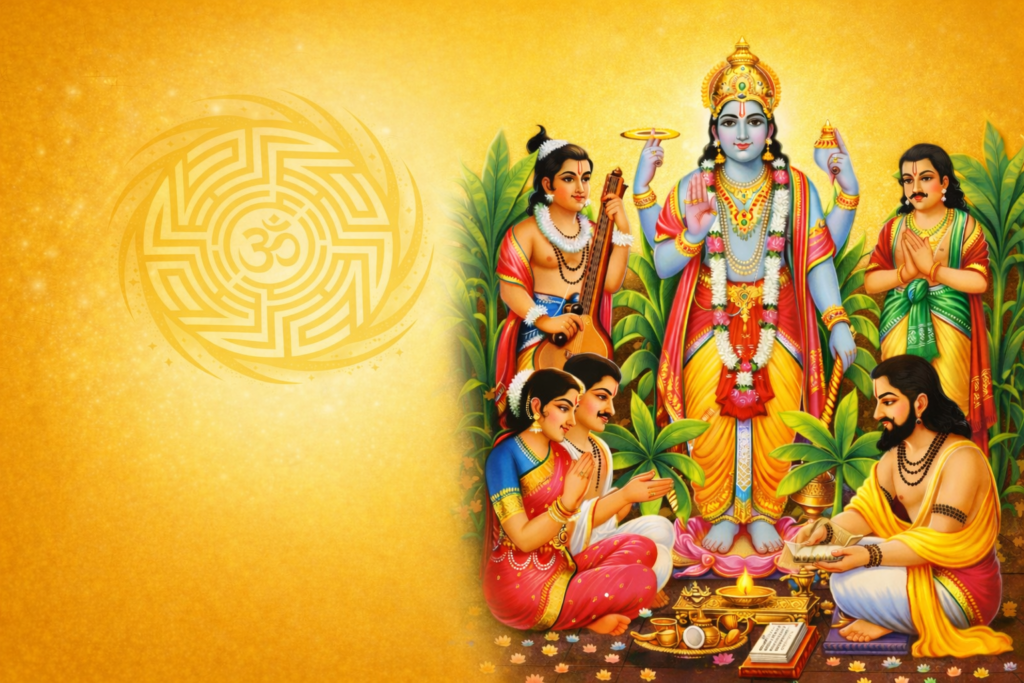
Sri Satyanarayana Swamy Vrat is the most popular and influential Vrat in Hindu tradition. This vrata which says "Satyame Narayanudu" (Truth is God) can be practiced by anyone irrespective of caste. Revakhanda of Skanda Purana describes the peculiarity of this vrata.
Here are the complete details about this vrata:
Vrata Specificity
This vrata is usually performed as a thank you for any auspicious event (housewarming, marriage, birthday) or fulfillment of desired wishes. This vrata is said to be an easy way to get rid of hardships in Kali Yuga.
Benefits of fasting
Prevention of difficulties: Negative energy in the house is removed and peace is created.
Completion: Tasks undertaken are completed without any interruptions.
Progeny & wealth: Belief that poverty will be removed and wealth and progeny will be born.
Process of Vrata
This vrata is mainly divided into five parts (adhyayas).
Mandapa decoration: The house is cleaned, muggwa is done, a new cloth is spread on a pedestal and rice is poured. A kalash is placed on it and a picture or image of the lord is enshrined. It is customary to build banana trees on all four sides of the Peeta.
Commencement of Puja: Starting with Vinayaka Puja, Navagraha Puja and Ashtadikpalaka Puja are performed.
Shodashopachara Pooja: Satyanarayana is worshiped with Ashtottaram and other mantras.
Katha Shravanam: The most important part of the Vratam is listening to the story of the five chapters. These stories illustrate the greatness of Vrat and the dangers of neglecting Vrat.
Offering (Saprasadam): "Saprasadam" (prasadam made of ghee, milk, ghee, sugar/jaggery and bananas) is offered to the Lord. Making this prasad according to exact weight (savva sheru means about one and a half kilos or so) is a specialty.
The main gist of the Vrata Katha
Chapter One: Suta Mahamuni tells the precepts of the Vrata to the Shaunakadi Munus.
Chapter Two: How a Poor Brahmin and a Firewood Seller Become Rich by Fasting.
Chapter Three: A king named Ulkamukhu and a merchant (saint) are saved from hardship by the effect of Vrata.
Chapter Four: The hardships of the merchant who neglects the fast, and the profit of returning to the fast.
Chapter Five: The Troubles of Tungadhvaja Maharaja who despised Prasad.
When should it be performed?
Full Moon: It is most auspicious to perform this vrata on the full moon day of every month.
Ekadashi: Ekadashi tithi is also suitable for this puja.
Auspicious deeds: Marriage, house entry or when starting any new work.
Saturday: As it is auspicious week for Lord Vishnu, it can also be done on Saturday.
Important Note: Prasadam should not be neglected in this vrat under any circumstances. After listening to the story one should take prasadam and distribute it to everyone.
The ritual is performed by Puja Phal's associated priests in a traditional, pure manner, with the name and gotra of the devotees, exclusively online. The video recording of the complete puja is sent to the devotees' WhatsApp.